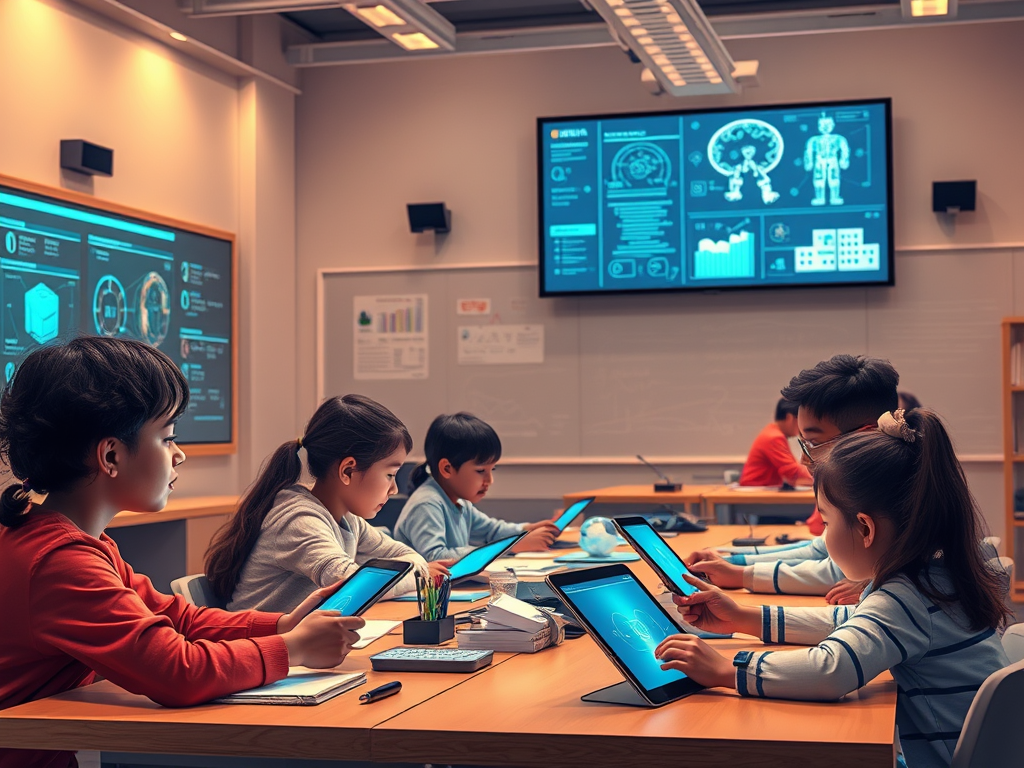
Artificial Intelligence (AI) is transforming various sectors, and education is no exception. By integrating AI into educational frameworks, traditional teaching methodologies are being reshaped, leading to personalized learning experiences and streamlined administrative tasks. This article explores the multifaceted impact of AI on the education system, highlighting its benefits, challenges, and future prospects.
Personalized Learning Experiences
One of the most significant contributions of AI in education is the facilitation of personalized learning. AI algorithms can analyze individual student data, including learning styles, strengths, and weaknesses, to tailor educational content that meets specific needs. This customization enhances student engagement and improves learning outcomes. For instance, AI-powered platforms can adjust the difficulty level of exercises based on a student’s performance, ensuring optimal challenge and growth.
Intelligent Tutoring Systems
AI-driven Intelligent Tutoring Systems (ITS) provide students with real-time feedback and guidance, akin to one-on-one instruction. These systems use natural language processing and machine learning to understand student queries and provide explanations, making learning more interactive and accessible. By offering instant support, ITS can help bridge gaps in understanding and promote self-paced learning.
Automation of Administrative Tasks
Educators often spend a considerable amount of time on administrative duties such as grading, scheduling, and managing resources. AI can automate these tasks, allowing teachers to focus more on instruction and student engagement. For example, AI-powered grading systems can evaluate multiple-choice and essay responses with high accuracy, providing timely feedback to students.
Enhanced Accessibility
AI technologies are making education more accessible to students with disabilities. Speech-to-text applications, text-to-speech readers, and other assistive technologies powered by AI can help overcome barriers to learning. For instance, visual recognition systems can describe images for visually impaired students, while real-time captioning can aid those with hearing impairments.
Data-Driven Insights
AI enables the collection and analysis of vast amounts of educational data, providing insights into student performance, engagement levels, and curriculum effectiveness. Educators can use this information to identify at-risk students, tailor interventions, and improve teaching strategies. Data-driven decision-making fosters a more responsive and effective education system.
Challenges and Ethical Considerations
While AI offers numerous benefits, its integration into education also presents challenges:
- Data Privacy and Security: The collection of student data raises concerns about privacy and the potential misuse of information. Ensuring robust data protection measures is essential.
- Bias and Fairness: AI systems can inadvertently perpetuate biases present in training data, leading to unfair outcomes. Continuous monitoring and updating of AI algorithms are necessary to mitigate bias.
- Dependence on Technology: Over-reliance on AI may diminish critical thinking and problem-solving skills among students. It’s important to balance technology use with traditional teaching methods.
- Equity in Access: Not all educational institutions have the resources to implement AI technologies, potentially widening the digital divide. Efforts must be made to ensure equitable access to AI tools.
The Future of AI in Education
The future of AI in education holds promise for even more personalized and efficient learning experiences. Emerging technologies like virtual reality (VR) and augmented reality (AR) integrated with AI could create immersive learning environments. Additionally, AI could facilitate lifelong learning by providing continuous, tailored educational opportunities beyond traditional schooling.
Conclusion
AI is undeniably transforming the education system by personalizing learning, automating administrative tasks, and providing valuable insights. However, it is crucial to address the associated challenges to fully harness its potential. By implementing ethical guidelines, ensuring data privacy, and promoting equitable access, AI can be a powerful tool in creating a more effective and inclusive educational landscape.
FAQs
1. How does AI personalize learning in education?
AI personalizes learning by analyzing individual student data to tailor educational content that aligns with their unique learning styles, strengths, and weaknesses.
2. What are Intelligent Tutoring Systems (ITS)?
Intelligent Tutoring Systems are AI-driven platforms that provide real-time feedback and guidance to students, simulating one-on-one instruction to enhance understanding and engagement.
3. Can AI help reduce teachers’ administrative workload?
Yes, AI can automate tasks such as grading, scheduling, and resource management, allowing teachers to focus more on instruction and student interaction.
4. What are the ethical concerns of using AI in education?
Ethical concerns include data privacy and security, potential biases in AI algorithms, over-reliance on technology, and ensuring equitable access to AI tools across different educational institutions.
5. How can AI make education more accessible?
AI-powered assistive technologies, such as speech-to-text and text-to-speech applications, can help students with disabilities by providing alternative ways to access and engage with educational content.